Cattle management
Calf weaning checklist: 7 signs a calf is ready—and how to avoid a growth check
Use this practical calf weaning checklist to assess starter intake, health, weight, water, stress, and post-weaning monitoring before removing milk.
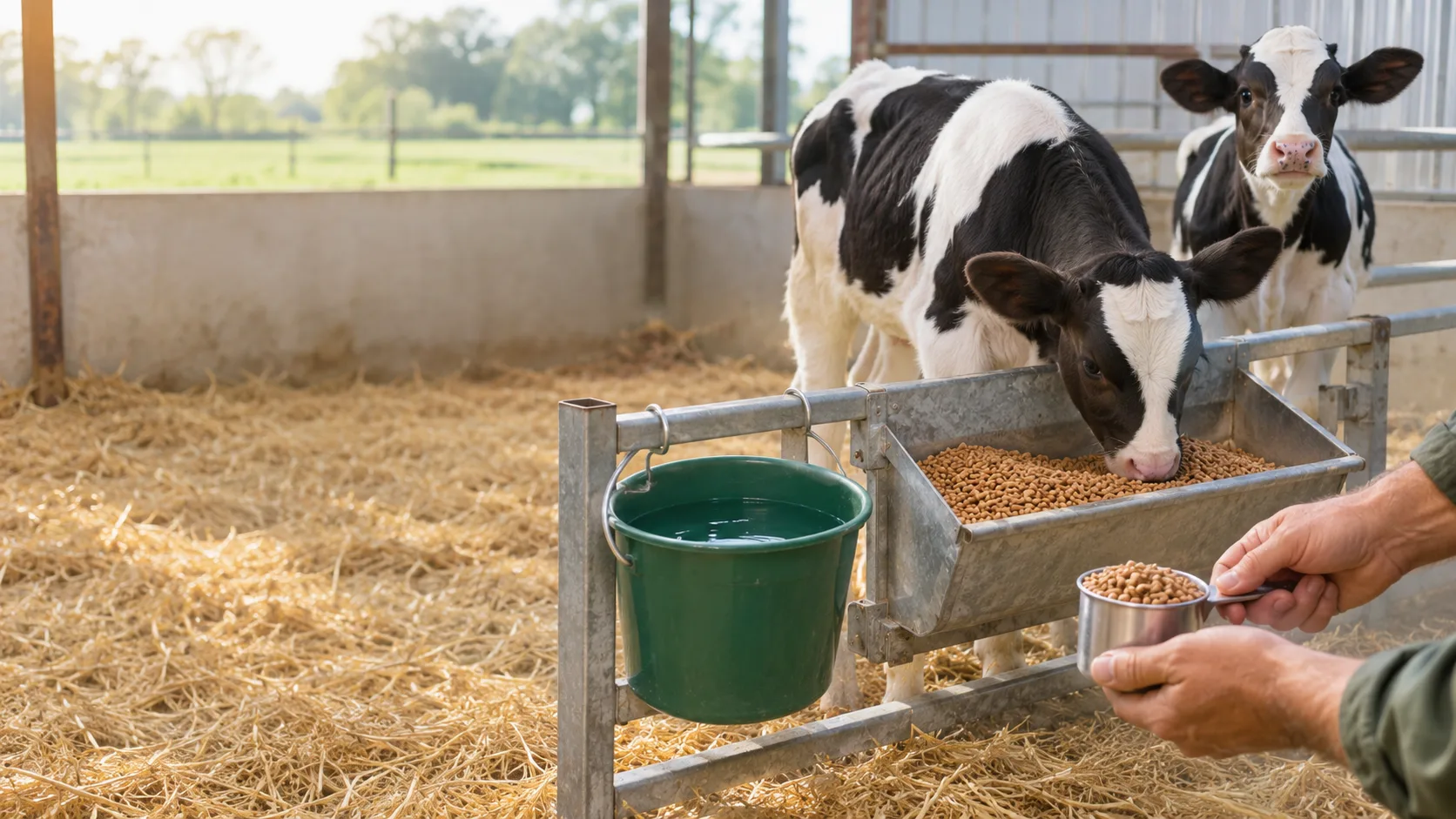
The safest answer to ‘when should I wean a calf?’ is not a calendar age. Wean when the calf is healthy, eating enough starter consistently, drinking water, and ready to get its nutrients from a functional rumen. For many systems that means roughly 8–12 weeks, but the individual calf’s intake and condition should decide the date.
A calf that is weaned before it is eating enough dry feed can lose growth just when you need steady performance. The checklist below gives you a repeatable gate to use for dairy, dairy-beef, and replacement calves. It is a management guide, not a substitute for your vet, nutritionist, farm assurance rules, or the feed label.
The quick answer: check these 7 signs first
- Starter intake is at least 1–1.5 kg per day for three consecutive days; some systems use a higher target, so follow your farm protocol.
- The calf is bright, alert, eating, and free from active scour, respiratory disease, fever, or other illness.
- Body weight and growth are on track for your breed, system, and target—not just an acceptable age on the calendar.
- Fresh, clean water is available and the calf is actually drinking it.
- The calf is maintaining condition without relying entirely on milk for energy.
- No other major stressor is landing at the same time, such as transport, regrouping, disbudding, vaccination, or a sudden feed change.
- You have a post-weaning plan for feed, housing, observation, and recording the next weight or health check.
1. Measure starter intake instead of guessing
Starter intake is the most useful practical signal because it shows whether the rumen is developing enough to handle the diet after milk is reduced. Offer a fresh, palatable, dust-free calf starter every day, remove stale leftovers, and record what was offered and refused. A simple weighed measure is more reliable than looking at an empty trough and assuming the calf ate it all.
Teagasc guidance commonly uses at least 1 kg of calf starter per day for three consecutive days as a minimum, while other programmes recommend around 1.5 kg or more. The right threshold depends on milk allowance, calf size, starter formulation, and your production target. The important rule is consistency: do not wean on the strongest intake day alone.
2. Confirm the calf is healthy before reducing milk
A calf fighting scour, pneumonia, dehydration, poor appetite, or another health problem has less capacity to handle the stress of weaning. Check attitude, appetite, manure, breathing, ears, eyes, navel, and temperature according to your farm health plan. If something is wrong, delay the transition and involve your vet promptly rather than trying to make the calf ‘catch up’ after weaning.
3. Use weight as a second gate—not age alone
Age can help you plan a review, but it cannot tell you whether a particular calf has developed enough. Weigh calves regularly or use a consistent heart-girth method, and compare the result with your breed and farm targets. A trend is more useful than one number: a calf with steady growth and strong intake is a different decision from a calf that has recently stalled.
4. Keep water and forage working for the rumen
Fresh water supports starter intake and rumen development, so it should be available from the start and checked every day. Provide the forage recommended by your nutrition plan; in many calf systems, a small amount of clean, suitable straw is preferred to encouraging a young calf to fill up on bulky hay. Avoid letting forage replace the energy-dense starter that supports growth before and immediately after weaning.
5. Choose a low-stress weaning method
Abrupt and gradual weaning can both work when the calf is healthy and already eating enough starter. A gradual reduction over about 7–10 days can make the change easier, especially in higher-milk or intensive feeding systems. Reduce milk in a planned way while keeping starter, water, and the daily routine consistent. Avoid stacking weaning with moving pens, transport, vaccination, castration, disbudding, or a sudden group change.
6. Watch the first 10 days after weaning
- Check appetite and starter intake every day; intake should recover and rise as milk is removed.
- Observe manure consistency, breathing, demeanour, and signs of dehydration or bullying.
- Keep the feed and water points easy to find, clean, and accessible to every calf.
- Avoid a second major feed change immediately after weaning.
- Record the next weight or growth check so a quiet growth check is not missed.
- Escalate illness or a sustained intake drop early rather than waiting for the next routine visit.
Common mistakes that cause a post-weaning setback
- Weaning every calf at the same age even when starter intake varies widely.
- Counting feed put in the trough rather than measuring likely intake.
- Offering too much bulky forage and not enough energy-dense starter.
- Allowing stale, mouldy, dusty, or contaminated feed to reduce appetite.
- Removing milk while the calf is sick or during severe weather stress.
- Moving the calf, changing its group, and changing its diet on the same day.
- Recording the weaning date but not the reason, intake, weight, or follow-up result.
Turn the checklist into a simple farm record
For each calf, record the date, starter intake for the previous three days, weight or measurement, health status, milk-feeding change, and the date of the next check. That creates an audit trail and helps you spot patterns: a poor starter batch, a water-access issue, a pen problem, or a group of calves that needs a different weaning plan.
Farmleo can keep those observations attached to the animal instead of scattered across a whiteboard, notebook, or memory. When the calf is reviewed later, the team can see what happened before weaning and whether growth and health held steady afterward.
Ready to turn insight into action? Farmleo keeps your herd data organized so you know what to do next in every season.