Herd health
10 costly mistakes livestock farmers make (and how to avoid them)
A practical 10-minute guide to the biggest profit-killing errors in livestock operations and the simple systems that prevent them.
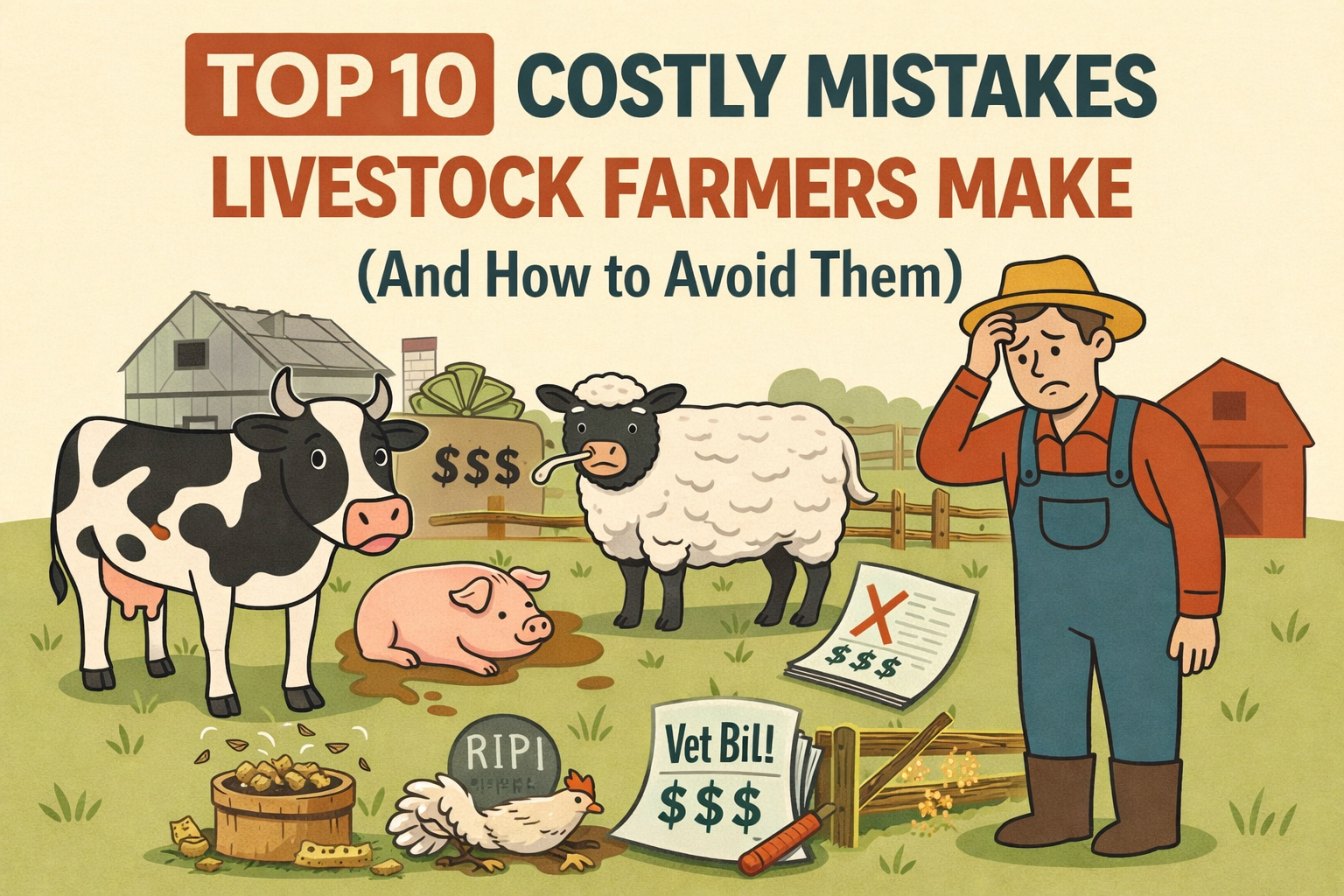
If profits feel tighter every season, it is usually not because of one big disaster. It is because of small, repeated misses: a treatment logged late, a breeding date forgotten, a feed decision made without numbers, or a sick animal spotted one day too late.
The good news is that most of these losses are preventable. Below are 10 of the most expensive mistakes livestock farmers make, plus practical ways to avoid them so you protect herd health, improve performance, and keep more money in the business.
1. Running the farm on memory instead of records
When decisions rely on memory, things get missed. Vaccines slip, repeat treatments happen, breeding timelines blur, and confidence in the data drops.
How to avoid it
- Keep one record system for health, breeding, weight, movement, and treatments.
- Record events the same day, not when things get quieter.
- Use fixed fields like date, animal ID, action, and next step instead of long unstructured notes.
2. Missing preventive health windows
A missed vaccine or deworming cycle can trigger disease spread, lower growth, and higher treatment bills.
How to avoid it
- Build a species-by-species health calendar with due dates.
- Review upcoming tasks weekly.
- Attach every health entry to a next action date.
3. Treating animals without complete treatment logs
Incomplete treatment records create compliance risk, repeated medication errors, and weak follow-up care.
How to avoid it
- Log medicine name, dose, date, administrator, and recheck date every time.
- Standardize treatment protocols across staff.
- Audit treatment records monthly to find gaps.
4. Weak breeding records and follow-ups
Missed heat signs, forgotten service dates, and late pregnancy checks increase open days and reduce productivity.
How to avoid it
- Track service date, method, sire details, expected check date, due date, and final outcome.
- Run a weekly list for unknown and not-pregnant animals.
- Prepare due-date windows early so staffing and supplies are ready.
5. Ignoring feed efficiency data
Feed is one of the largest farm costs. Without tracking intake and performance, profit leaks through poor conversion.
How to avoid it
- Track feed cost by group and compare with weight gain or milk output.
- Flag groups with weak feed conversion early.
- Review nutrition decisions with real farm data, not estimates.
6. Delaying sick-animal identification
Late detection means longer recovery, higher medicine use, and greater mortality risk.
How to avoid it
- Run daily visual checks with a short symptom checklist.
- Train all workers to report early warning signs.
- Use a same-day escalation process for suspect cases.
7. Poor newborn management
Early-life losses hurt replacement quality and long-term herd performance.
How to avoid it
- Standardize first-24-hour protocols for newborn care.
- Track birth weight and early growth milestones.
- Review losses by cause every month and fix root causes.
8. Inconsistent staff handoffs
Important details get lost between shifts, including follow-ups, animals to watch, and urgent tasks.
How to avoid it
- Use a daily handoff list: done, due, and watchlist.
- Assign ownership so each task has one responsible person.
- Hold short daily standups during high-pressure periods.
9. Not reviewing key farm metrics
If numbers are reviewed only when there is a crisis, decisions stay reactive and expensive.
How to avoid it
- Track a small weekly KPI set: mortality, conception rate, treatment incidence, average daily gain, and feed cost efficiency.
- Compare month to month and by season to spot patterns.
- Turn KPI changes into specific action plans.
10. Waiting too long to digitize farm operations
Paper logs and scattered spreadsheets slow decisions, increase errors, and make team coordination harder as the farm grows.
How to avoid it
- Start with one workflow first, usually health and breeding.
- Migrate only essential historical data and begin using the system immediately.
- Choose tools simple enough for daily use by everyone on the farm.
Final takeaway
The most profitable farms are not perfect, they are consistent. They record on time, review every week, and make decisions from clear data instead of guesswork.
- Start with a health calendar.
- Build a breeding follow-up workflow.
- Set a weekly KPI review rhythm.
Fixing even a few of these mistakes this season can reduce preventable losses, improve herd performance, and protect margins.
Ready to turn insight into action? Farmleo keeps your herd data organized so you know what to do next in every season.