Livestock records
Most livestock farmers are losing money here and they do not even track it
A practical guide to the hidden livestock management records that quietly affect feed costs, animal health, breeding results, and farm profit.
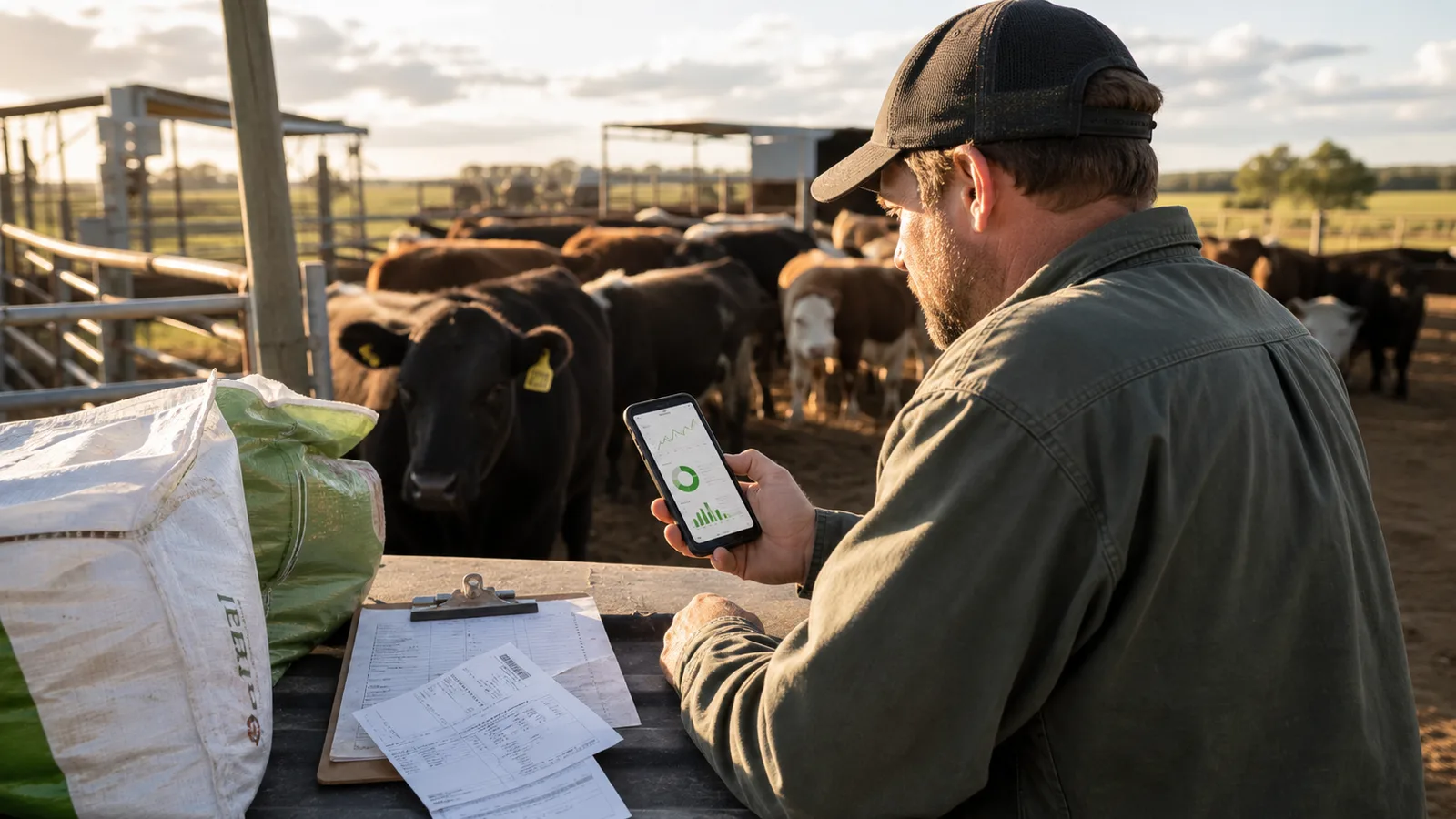
Livestock farming has always been a business of tight margins. Feed prices move. Veterinary costs rise. Weather changes pasture quality. Breeding results vary. Markets can be strong one month and disappointing the next.
But one of the biggest profit leaks on many livestock farms is not dramatic at all. It is often the everyday livestock management detail that never gets tracked properly.
A missed treatment. An unknown feed cost. A breeding date written down somewhere but not easy to find. A calf, lamb, kid, or piglet growing slower than expected. A cow that looks fine but has quietly become expensive to keep. A mortality pattern that feels normal until the numbers are added up.
These things rarely look like major problems on the day they happen. Over a season, they can quietly reduce profit, weaken herd performance, and make good livestock farmers work harder for less return.
That is why better livestock records are no longer just paperwork. Accurate farm records are one of the most important tools for running a profitable livestock farm.
The hidden cost most livestock farmers miss
Most livestock farmers know their big costs. They know feed is expensive. They know vet bills matter. They know housing, bedding, labour, breeding, transport, and medicines all affect profit.
The problem is that many farms do not connect those costs back to individual animals or groups of animals. Without that connection, it becomes difficult to know which animals are earning their place and which ones are quietly draining money.
A livestock farm can look busy and well managed while still leaking profit through poor records. The danger is that the losses are spread across many small events instead of appearing as one obvious problem.
Questions every profitable livestock farm should answer
- Which animals are costing the most in feed, treatment, or labour?
- Which cows, ewes, sows, does, or breeding groups are producing the best return?
- Which animals have repeated health problems?
- Which breeding lines are performing well?
- Which animals are slow to gain weight or falling behind the group?
- Which treatments are being repeated too often?
- Which animals should be kept, sold, culled, or monitored more closely?
If those answers are based only on memory, the farm is making decisions with incomplete information. That is where money leaks out.
A farmer may keep an animal that looks good enough but has actually needed repeated treatments, failed to breed on time, or produced weaker offspring. Another animal may be performing well, but without proper records, that performance is never fully recognized.
Good livestock management is not just about working harder. It is about knowing which animals are helping the farm make money and which ones are quietly reducing margin.
Why paper records and memory are no longer enough
For many years, notebooks, whiteboards, spreadsheets, and memory have carried farms through daily work. They can still be useful, but they often break down when the farm gets busy.
A treatment is recorded in one notebook. Breeding information is in another. Weights are on someone's phone. Sales records are in a spreadsheet. Calving, lambing, kidding, or farrowing notes are remembered for now and written down later, if at all.
The issue is not that farmers do not care about records. Most do. The issue is that traditional record keeping does not always fit the speed and pressure of real farm life.
A livestock record system should be simple enough to use in the yard
- Quick to enter when the job happens
- Easy to search later
- Available on a mobile phone
- Organized by animal, herd, flock, or group
- Useful for real decisions, not just storage
- Clear enough for workers, vets, buyers, and advisors
That is why more farmers are moving toward livestock management software and digital farm record systems. With Farmleo, farmers can manage livestock records from an Android phone, iPhone, or web browser, making it easier to capture important information when it happens instead of trying to remember it later.
The farm data that actually matters
Not every farm needs complicated reports or endless dashboards. But every livestock farm benefits from tracking the records that directly affect health, productivity, and profit.
1. Animal health records
Health records are one of the most valuable parts of livestock management. They help farmers understand which animals have been treated, what medicines were used, when withdrawal periods apply, and whether the same problems keep returning.
- Illness or injury notes
- Veterinary visits
- Treatments given
- Medicine dosage
- Vaccination history
- Withdrawal periods
- Parasite control
- Lameness events
- Mortality records
Without accurate livestock health records, it becomes harder to spot patterns. A single sick animal may be unlucky. Several animals with the same issue may point to a housing, nutrition, pasture, hygiene, or management problem.
2. Breeding and reproduction records
Breeding performance can make or break profitability in livestock farming. Missed breeding dates, poor conception rates, long calving intervals, or weak offspring all affect income.
- Service dates
- Artificial insemination dates
- Pregnancy checks
- Expected birth dates
- Calving, lambing, kidding, or farrowing dates
- Parentage
- Birth outcomes
- Fertility issues
- Repeat breeders
When breeding records are clear, farmers can plan better, reduce missed opportunities, and identify animals that are not performing. This is especially important for cattle farms, sheep farms, goat farms, pig farms, and mixed livestock farms where timing matters.
3. Feed and weight performance
Feed is often one of the largest costs in livestock farming. Many farmers know what they spend on feed without knowing exactly what that feed produces.
Tracking weight gain, body condition, feed changes, and performance over time can help answer whether animals are gaining efficiently, whether one group is outperforming another, and whether a feed change actually improved results.
This is where livestock management software can be especially valuable. When feed, weight, and animal records are connected, farmers can make better decisions based on real performance instead of guesswork.
4. Mortality and losses
Every livestock farmer knows losses happen. But unless they are tracked properly, it is easy to underestimate the true cost.
- Date of death
- Animal ID
- Age or stage of production
- Suspected cause
- Group or location
- Relevant notes
- Preventive action taken
Tracking livestock mortality helps farmers see whether losses are random or part of a larger pattern. It can also support better conversations with vets and advisors. Even a small reduction in preventable losses can make a major difference to farm profit.
5. Sales, purchases, and movement records
Buying and selling animals is not just an accounting task. It is part of livestock performance management.
- Purchase price
- Sale price
- Animal source
- Animal destination
- Date moved
- Weight at sale
- Reason for sale
- Profit or loss indicators
Good livestock records help farmers understand which animals, groups, or breeding lines are producing the best return. They also support traceability, compliance, and buyer confidence.
You cannot improve what you do not track
This is the hard truth in livestock management: if you are not tracking it, you are probably guessing. And guessing is expensive.
A farmer may feel that a herd or flock is performing well, but the records may show a different story. One group may have higher treatment costs. Another may have better growth rates. One breeding line may produce stronger youngstock. Another may create more problems than profit.
The goal is not to bury farmers in data. The goal is to give farmers clear information they can use.
- Which animals should I keep?
- Which animals should I sell?
- Which animals need attention?
- Which management changes are working?
- Where am I losing money?
- What should I do differently next season?
Why better livestock records lead to better farm decisions
Good farm records are not just for compliance. They are a management tool.
- Reduce preventable losses
- Improve animal health
- Make better breeding decisions
- Track medicine usage
- Monitor productivity
- Identify poor performers
- Improve feed efficiency
- Prepare for vet visits
- Support farm assurance requirements
- Make stronger business decisions
Better records also reduce stress. Instead of searching through notebooks, messages, and memory, farmers can quickly find what they need during busy periods around calving, lambing, kidding, farrowing, dosing, scanning, weighing, and selling.
What makes Farmleo useful for livestock farmers?
Farmleo is a livestock management platform built to help farmers keep animal records organized and accessible across mobile and web. It supports the real daily work of livestock management: recording what happened, finding it again, and using it to make better decisions.
- Livestock records
- Animal health information
- Breeding details
- Farm activities
- Herd and flock performance
- Daily livestock management tasks
- Digital farm record keeping
Because Farmleo is available on Android, iOS, and Web, farmers can use it in the way that suits them best. A record can be added from a phone while working around the farm, then reviewed later from the web app.
The farmers who win are the ones who notice earlier
Profit in livestock farming often comes down to noticing problems before they become expensive: a disease pattern noticed early, a breeding issue caught before the season is lost, a feed problem identified before performance drops, or a poor-performing animal removed before it costs more money.
These decisions all depend on good records. The farms that track better often decide better. The farms that decide better usually perform better.
Final thought: the money is often in the details
Most livestock farmers are not losing money because they are lazy or careless. They are losing money because modern livestock farming is complex, and too many important details are easy to miss.
The good news is that this is fixable. By tracking animal health, breeding, feed performance, weights, mortality, sales, and movements, farmers can start seeing the farm more clearly. They can stop relying only on memory and start making decisions with confidence.
Ready to turn insight into action? Farmleo keeps your herd data organized so you know what to do next in every season.