Herd management
If you cannot answer these 7 questions about your herd, you are managing blind
A practical livestock management guide showing the seven herd questions every farmer should be able to answer to improve animal health, breeding, feed efficiency, and profitability.
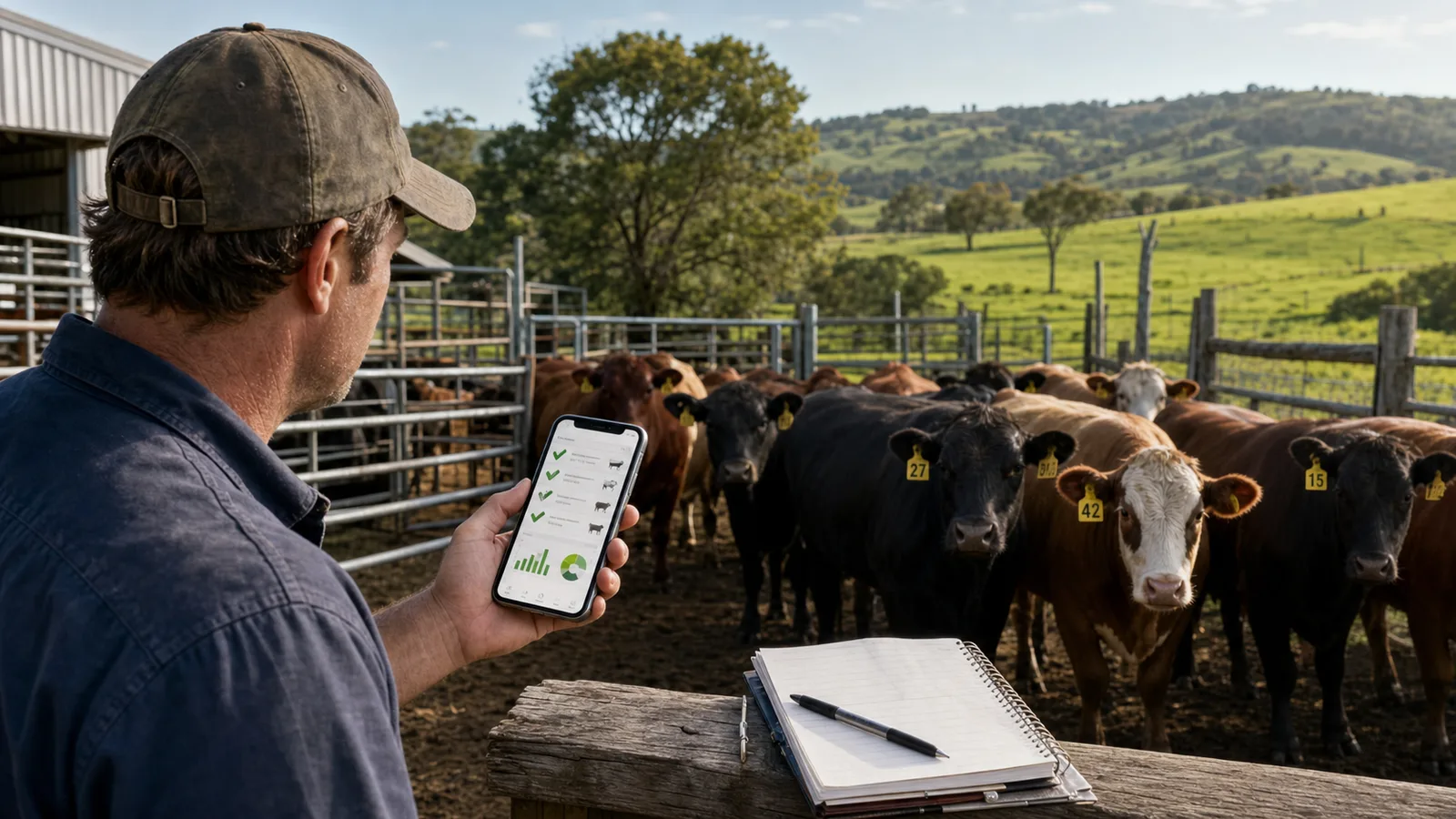
Most livestock farmers know their animals well. They can spot a sick cow from across the yard, remember which ewe caused trouble last season, and tell when a group is not quite right.
But good stockmanship and good herd data are not the same thing. A farmer can know the farm by feel and still miss the patterns that decide profit, animal health, breeding performance, and long-term productivity.
That is the uncomfortable truth behind modern livestock management: if you cannot answer the right questions about your herd, flock, or group, you are managing blind.
This does not mean you are a bad farmer. It means the farm has too many moving parts for memory alone. Treatments, breeding dates, weight changes, feed costs, mortality, animal movements, sales, and follow-ups all create information that matters later.
Below are seven questions every livestock farmer should be able to answer. If any of them are difficult, that is a sign your livestock records could be costing you money.
1. Which animals are actually making you money?
Every herd has animals that look productive and animals that are productive. The difference matters. A cow may look strong but need repeated treatments. A ewe may raise lambs every year with very little trouble. A gilt may perform well on paper but cost more in feed and time than she returns.
Profitability is not just sale price. It is the relationship between output and cost. Feed, medicine, labour, breeding, housing, replacements, and lost time all affect whether an animal is helping the farm.
- What did the animal cost to buy or raise?
- What treatments has it needed?
- How often has it produced a live, healthy offspring or saleable output?
- How quickly does it gain weight or return to production?
- What was its sale value or production value compared with its costs?
Without livestock performance records, many farmers keep animals because they are familiar, not because they are profitable. Good herd management means knowing which animals deserve to stay and which ones are quietly reducing margin.
2. Which animals have repeated health problems?
A single health issue can happen on any farm. Repeated health issues are different. They may point to poor immunity, weak genetics, housing pressure, parasite problems, nutrition gaps, injury risk, or animals that are simply not suited to the system.
The problem is that repeated cases are easy to miss when records are scattered across notebooks, messages, memory, and vet invoices.
- Which animals have been treated more than once this season?
- Which illness or injury keeps coming back?
- Which group has the highest treatment rate?
- Which medicines are used most often?
- Which animals need follow-up checks?
Animal health records help farmers move from reacting to problems to spotting patterns earlier. They also make vet conversations more useful because you can show what happened, when it happened, what was used, and whether the animal improved.
3. Which animals are late, open, or missing breeding targets?
Breeding performance is one of the biggest drivers of livestock profitability. Missed heat signs, forgotten service dates, unclear pregnancy status, long calving intervals, and late lambing or kidding can quietly reduce income.
A good livestock breeding record should help you see the animals that are on track and the animals that need attention.
- Which animals were served and when?
- Which animals need pregnancy checks?
- Which animals are due to calve, lamb, kid, farrow, or hatch soon?
- Which animals repeated or failed to conceive?
- Which sires or breeding lines are producing the best results?
When breeding information is easy to find, farmers can plan labour, prepare facilities, reduce missed cycles, and make better decisions about replacements and culling.
4. Which animals are falling behind on weight or production?
Slow growth and poor production are expensive because they can hide in plain sight. One animal falling behind may not look serious. A group falling behind can mean feed, parasite, health, water, housing, genetics, or management problems.
Tracking weight and production records gives farmers a clearer view of performance over time. It is especially useful for cattle management, sheep and goat management, pig management, poultry production, dairy herds, and mixed farms.
- Which animals are below target weight?
- Which groups are gaining slower than expected?
- Which animals are producing less milk, eggs, or saleable output?
- Did a feed change improve performance?
- Is poor performance linked to health events or breeding history?
The aim is not to weigh every animal every day. The aim is to track enough performance data to catch problems before they become expensive.
5. What is your feed actually producing?
Feed is often one of the largest costs on a livestock farm. Yet many farms track feed purchases without connecting feed to weight gain, production, health, or group performance.
That creates a dangerous blind spot. A feed bill only tells you what went in. Livestock management records help show what came out.
- Which groups are eating the most?
- Which groups are converting feed into growth or production?
- Which animals are slow to respond to better nutrition?
- Which feed changes improved results?
- Where could feed waste be reduced?
Feed efficiency does not need to be complicated. Even simple records can help farmers compare groups, notice weak performance, and make better feeding decisions.
6. Which animals or groups need action this week?
A lot of farm losses come from missed follow-ups. The treatment was done, but the recheck was forgotten. The animal was served, but the pregnancy check was not scheduled. The group needed dosing, but the date slipped. The calf needed attention, but the note was lost.
Livestock management is not just recording what happened. It is knowing what needs to happen next.
- Which animals need rechecks?
- Which treatments have withdrawal periods?
- Which animals are due for vaccination, dosing, scanning, weighing, or breeding checks?
- Which groups need moving, splitting, or closer monitoring?
- Which tasks are urgent this week?
This is one of the biggest advantages of digital livestock management software. A good system does not just store farm records. It helps bring the right records back when they matter.
7. What changed before performance dropped?
When herd performance drops, farmers often ask what is wrong now. A better question is what changed before the drop.
Disease pressure, feed quality, pasture condition, weather, housing, grouping, transport, staff changes, breeding decisions, and medicine protocols can all affect livestock performance. Without records, it is hard to connect cause and effect.
- Did feed change before weight gain slowed?
- Did a new group mix lead to more injuries or illness?
- Did weather or pasture quality affect body condition?
- Did a treatment protocol fail to solve the issue?
- Did a breeding line produce weaker offspring?
The best livestock farmers are not the ones who never have problems. They are the ones who notice patterns early and adjust quickly.
Why these seven questions matter
These questions are not just admin. They are the foundation of profitable livestock management.
- Better animal health decisions
- Stronger breeding planning
- Earlier disease detection
- Improved feed efficiency
- More accurate culling and replacement decisions
- Cleaner records for vets, partners, and buyers
- Less reliance on memory during busy periods
When answers are easy to find, farmers can move faster. When answers are hidden in memory or scattered notes, decisions become slower, riskier, and more expensive.
How to start answering these questions without creating more paperwork
The answer is not to track everything. That is how record keeping becomes overwhelming. The answer is to track the few things that change decisions.
- Record animal ID, date, and event every time something important happens.
- Keep health, breeding, weight, feed, movement, and sale notes in one system.
- Add follow-up dates when an action is needed later.
- Review records once a week for animals that need attention.
- Use the records to make one practical decision at a time.
A livestock record system only works if farmers actually use it. That means it must be quick, mobile-friendly, simple to search, and useful during real farm work.
Where Farmleo fits in
Farmleo is a livestock management platform designed to help farmers stop managing from scattered notes and start managing from clear records. It is built for livestock farmers who need practical animal records without turning the farm into an office.
With Farmleo available on Android, iOS, and Web, farmers can add information while working around the farm and review it later from a phone, tablet, or computer.
- Keep livestock records organized by animal, herd, flock, or group.
- Record animal health events and treatment notes.
- Track breeding information and important dates.
- Review herd activity and farm records in one place.
- Use mobile and web access so records are easier to keep up to date.
The point is simple: when your herd questions have clear answers, your management decisions become sharper.
Final thought: managing blind is optional
Livestock farming will always involve judgement, experience, and instinct. But the best judgement is supported by clear information.
If you cannot answer these seven questions about your herd, you do not need to panic. You need a better record system. Start with the records that affect health, breeding, feed, performance, and follow-up actions. Over time, those records become one of the most valuable tools on the farm.
Farmleo helps make that easier by giving farmers a practical livestock management platform across Android, iOS, and Web.
Ready to turn insight into action? Farmleo keeps your herd data organized so you know what to do next in every season.