Farm routines
Small farm livestock management system: a simple weekly routine that works
Build a practical livestock management routine for a small farm with weekly checks for animal records, health, breeding, feed, facilities, and follow-up tasks.
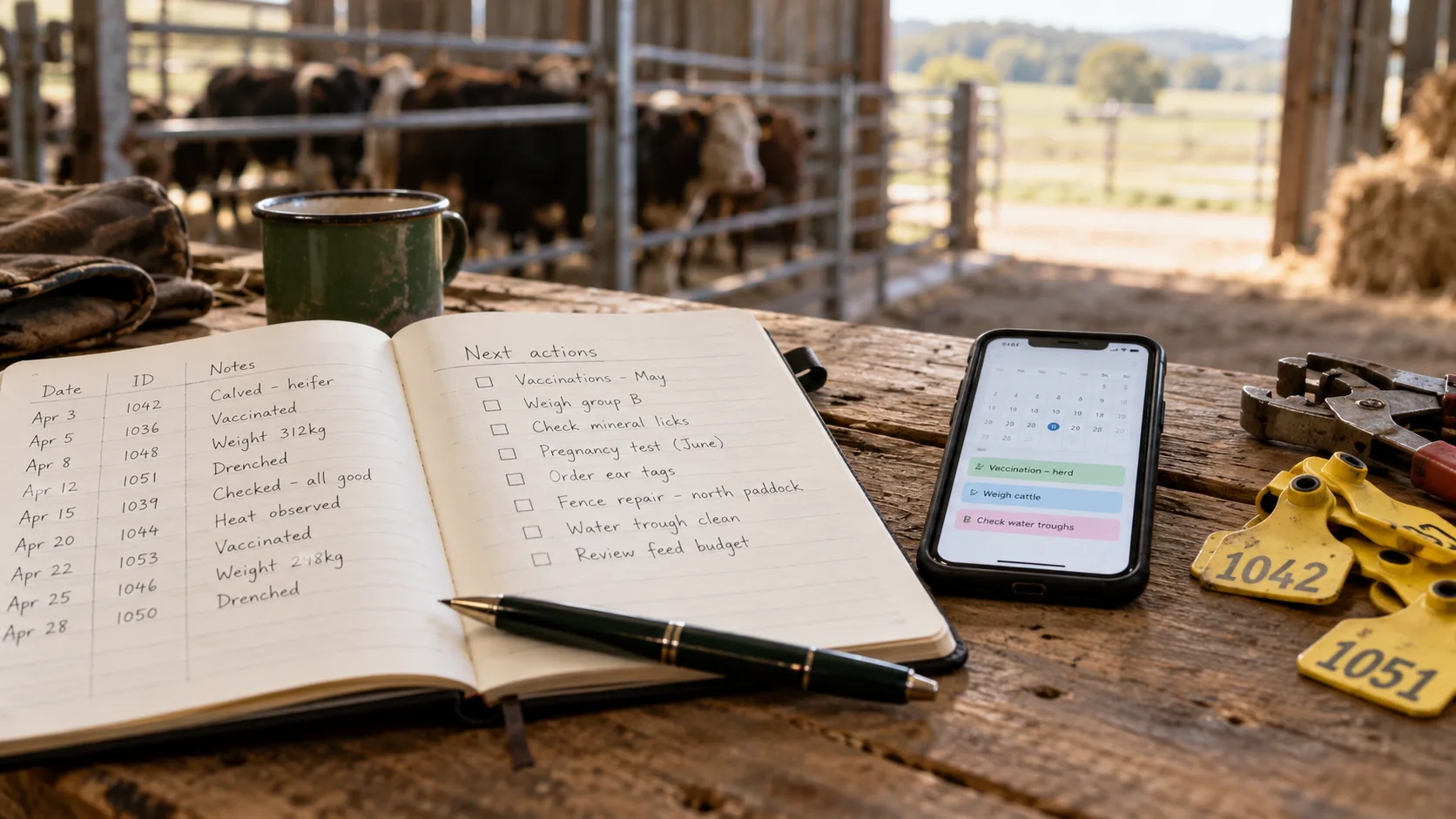
Small farms do not need more paperwork for its own sake. They need a short, repeatable system that makes the next important job visible. When records are captured during normal work and reviewed at a set time each week, a small team can manage more confidently without trying to remember every treatment, service, due date, feed purchase, and observation.
The routine below is designed for cattle, sheep, goats, pigs, poultry, buffalo, and mixed farms. Adapt the checks to your enterprise, but keep the habit of recording what happened, what needs to happen next, and who is responsible.
Start each week with the animal list
Begin by checking that new births, purchases, sales, deaths, and transfers have been recorded. Every animal should have a unique ID and enough detail to distinguish it from similar animals. If a record is wrong, correct it while the event is still fresh rather than waiting until the end of the season.
Run a health and welfare sweep
- Review animals with a recent treatment, injury, illness, or observation.
- Check that follow-up dates and withdrawal or isolation notes are visible where relevant.
- Record unusual appetite, mobility, breathing, behaviour, body condition, or production changes.
- Escalate concerns to your vet or advisor; a farm app supports the record but does not replace professional diagnosis.
Review breeding and due-date readiness
Keep service events, pregnancy checks, expected due dates, births, and outcomes linked to the right animal. A weekly due-soon view gives you time to prepare housing, supplies, labour, and observation plans. For breeding animals, parentage and lineage records also help you review prospective pairings before the decision is made.
Check feed, water, and stock pressure
Review what was purchased, what was used, and how much stock remains. Compare the plan with what animals are actually doing. A feed record becomes more useful when it is linked to group size, growth, body condition, production, and unexpected waste. Also include water access, trough condition, and any change that could affect intake.
Walk the facilities and pasture
- Inspect fences, gates, handling areas, shelters, bedding, and ventilation.
- Check pasture conditions, grazing pressure, mud, shade, and access to clean water.
- Record repairs and assign a next action instead of leaving the issue in a group message.
- Note weather or environmental events that may explain health or performance changes.
Finish with a short action list
The final step is to turn the review into three lists: urgent today, due this week, and worth monitoring. Keep the list short enough to be used. When the task is completed, close it with a note so the next person can see the outcome. This is where a connected livestock management app can save time: the action is attached to the animal or group instead of disappearing in a notebook or chat.
Ready to turn insight into action? Farmleo keeps your herd data organized so you know what to do next in every season.