Herd health
Your animals are telling you something. Your records probably aren’t.
A practical livestock management guide for farmers who want to spot herd problems earlier, improve animal health records, and make better decisions from data instead of memory.
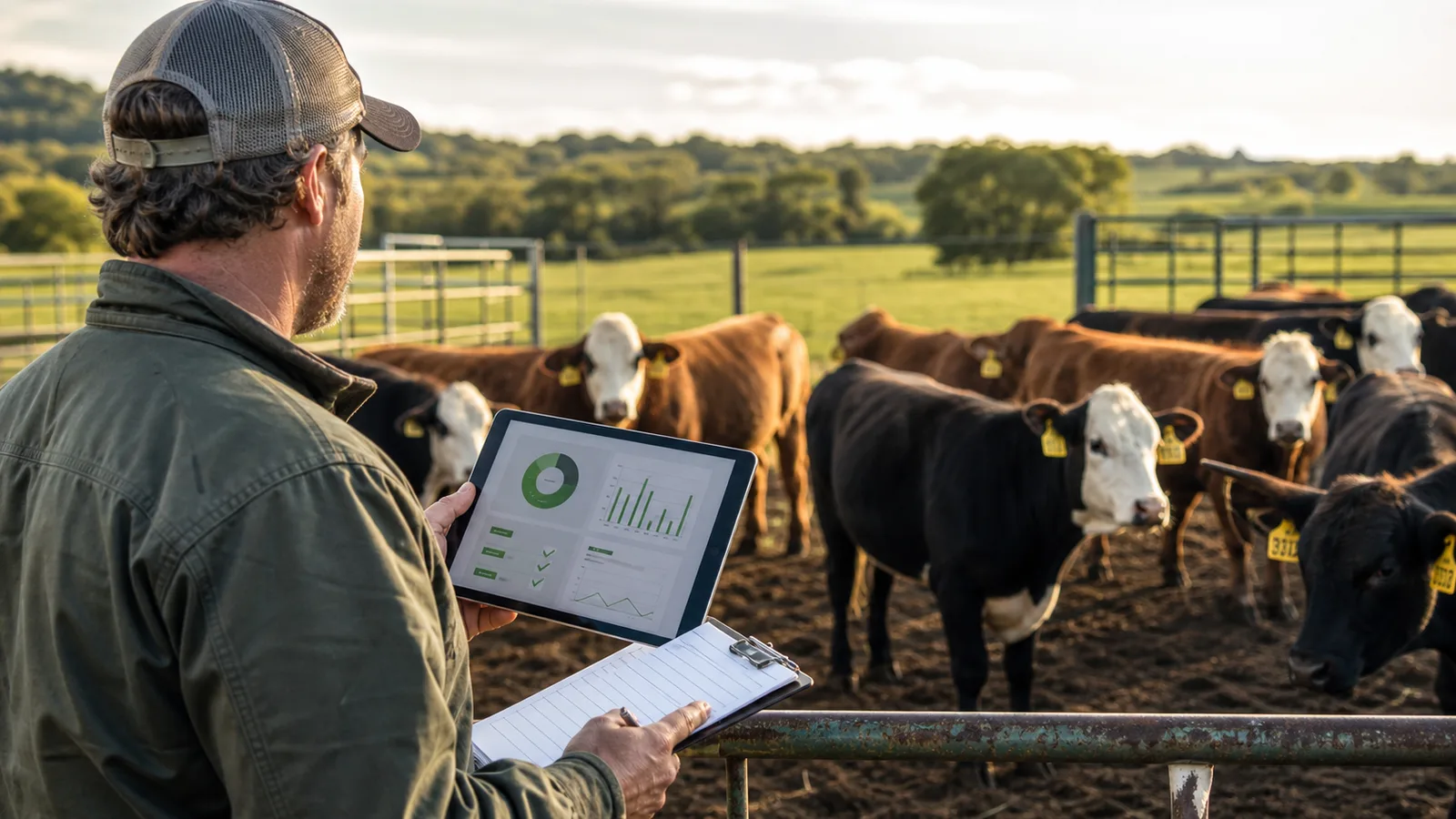
Livestock rarely stay silent. A cow that hangs back from the group, a ewe that loses condition, a goat that stops chewing properly, a pig that changes its appetite, or a flock that is less active than usual are all telling you something.
The challenge is that livestock management often depends on what gets written down, not what gets noticed. Farmers see the signs, but the records do not always capture them clearly enough to turn those observations into better decisions.
That gap is expensive. When animal health records, breeding records, feed notes, weights, and follow-up actions are scattered across memory, notebooks, and photos, the farm becomes harder to manage.
This article shows how to read the signs your animals are already giving you, what to record, and how better livestock records can help you catch problems earlier. If you want a simple system to keep those records organized, Farmleo is available on Android, iOS, and Web.
The herd is giving you data every day
A good stockperson notices body condition, gait, appetite, behavior, isolation, manure changes, coat condition, and how quickly animals move to feed or water. Those details are not random. They are signals.
The problem is that a signal only becomes useful when it is compared with history. One animal being quiet may not matter. Three animals doing it after a feed change or a weather shift might mean something very different.
That is where livestock record keeping matters. The more consistently you log what you see, the easier it becomes to spot patterns that affect animal health and farm profit.
What your animals may be trying to tell you
- A drop in appetite can point to illness, stress, feed quality issues, or water access problems.
- Isolation from the group may signal pain, lameness, or early disease.
- Changes in body condition can reveal feed inefficiency, parasite pressure, or breeding issues.
- Slower movement or stiffness may show lameness, injury, or housing problems.
- Repeated coughing, scouring, or poor growth can point to a larger herd health pattern.
None of these signs are useful if they are never recorded. The farm may feel busy, but without proper records it becomes difficult to know whether the same problem is repeating.
1. If the animal is changing, what changed first?
When performance drops, the best question is not just what is wrong now, but what changed before the problem appeared. Feed, pasture, weather, housing, grouping, transport, breeding, and treatments can all influence how animals behave and perform.
- Was there a feed change?
- Did the group move?
- Did weather or bedding conditions change?
- Was a medicine or treatment given?
- Was the animal recently bred, weaned, or mixed with others?
The more clearly you record those events, the easier it is to connect cause and effect. That is the difference between reacting late and making a smart livestock management decision.
2. Which animals are repeating the same problems?
A single treatment might be routine. Repeated treatment is a pattern. Repeated poor growth is a pattern. Repeated breeding failure is a pattern.
Patterns are where money is lost. They can hide for months when information is spread across notebooks, text messages, and the back of feed invoices.
- Which animals needed treatment more than once?
- Which breeding pairs or lines keep underperforming?
- Which groups show the same symptoms every season?
- Which animals are the slowest to recover after illness?
- Which animals keep slipping behind target weight?
A proper digital livestock management system makes these patterns much easier to see because the history stays attached to the animal rather than disappearing into scattered notes.
3. Are you seeing the same issue across the whole herd?
One weak animal is one thing. A group issue is another. If multiple animals show the same behavior or decline, the cause may be management, not just the animal.
Examples include poor water access, low-quality feed, parasite burden, ventilation issues, excessive stocking density, or a change in handling routine.
- Are several animals off feed at the same time?
- Do multiple animals have the same lameness issue?
- Are youngstock falling behind together?
- Did fertility drop across a whole group?
- Did mortality or treatment rates rise after a management change?
Herd records matter because they show whether a problem is isolated or systemic. That difference determines whether you treat one animal or rethink the whole system.
4. What does your breeding history really say?
Breeding records are one of the most powerful tools in livestock management. They tell you which animals conceive easily, which take longer, which produce strong offspring, and which keep missing targets.
- Service or mating date
- Pregnancy check date and result
- Expected birth or farrowing date
- Actual outcome
- Any complications
When breeding records are incomplete, farmers often keep waiting for answers that were already visible in the herd. Good records help you stop guessing and start planning.
5. What is the feed telling you?
Feed is one of the biggest costs on any livestock farm, so feed efficiency matters. If animals are eating but not converting that feed into growth, milk, eggs, or healthy condition, the farm is leaking margin.
- Which groups are gaining well?
- Which groups are lagging behind?
- Did a ration change improve performance?
- Are certain animals wasting feed through poor access or competition?
- Are health issues affecting feed conversion?
That is why feed records should live beside weight, health, and breeding records. When you can compare the inputs with the outputs, decisions become far stronger.
6. Are follow-ups being missed?
A lot of animal losses do not happen because a farmer failed to act. They happen because the follow-up was forgotten. A treatment was given but not checked again. A breeding event was noted but not revisited. A sick animal improved, then worsened later.
Follow-up records are where simple livestock management software pays for itself. If the system reminds you what comes next, the farm is less likely to drift.
- Which animals need a recheck?
- Which animals are due for vaccination or dosing?
- Which animals still need pregnancy confirmation?
- Which groups need movement or separation?
- Which tasks are still open this week?
Why better records improve animal welfare and profit
Better records do not only make farms more organized. They improve animal welfare because problems are found earlier and handled more consistently.
- Earlier illness detection
- Cleaner medicine histories
- Better breeding decisions
- Fewer repeat mistakes
- Stronger culling decisions
- More confidence during busy seasons
That is good for the animals and good for the business. The farms that notice sooner usually spend less time correcting avoidable problems.
How to start without overcomplicating it
You do not need a complicated system. You need a consistent one. Start by recording only the events that affect decisions: health, breeding, weights, feed, movements, and follow-up actions.
- Record the animal ID, date, and event.
- Add a short note about what you observed.
- Log the next action or check date.
- Review the list once a week.
- Use the history before making the next decision.
The whole point of livestock record keeping is not to create paperwork. It is to turn what your animals are telling you into useful action.
Where Farmleo fits
Farmleo is a livestock management platform built for farmers who want clearer records without more admin pain. It helps keep animal history, farm activity, and follow-up work in one place across Android, iOS, and Web.
If you are already noticing the signs but struggling to keep the records straight, Farmleo can help turn those observations into a better system.
Final thought
Your animals are always giving you clues. The question is whether your records are good enough to catch them before they become expensive.
If you want a simpler way to manage livestock records, keep better animal health notes, and make stronger herd decisions, Farmleo is available on Android, iOS, and Web.
Ready to turn insight into action? Farmleo keeps your herd data organized so you know what to do next in every season.